
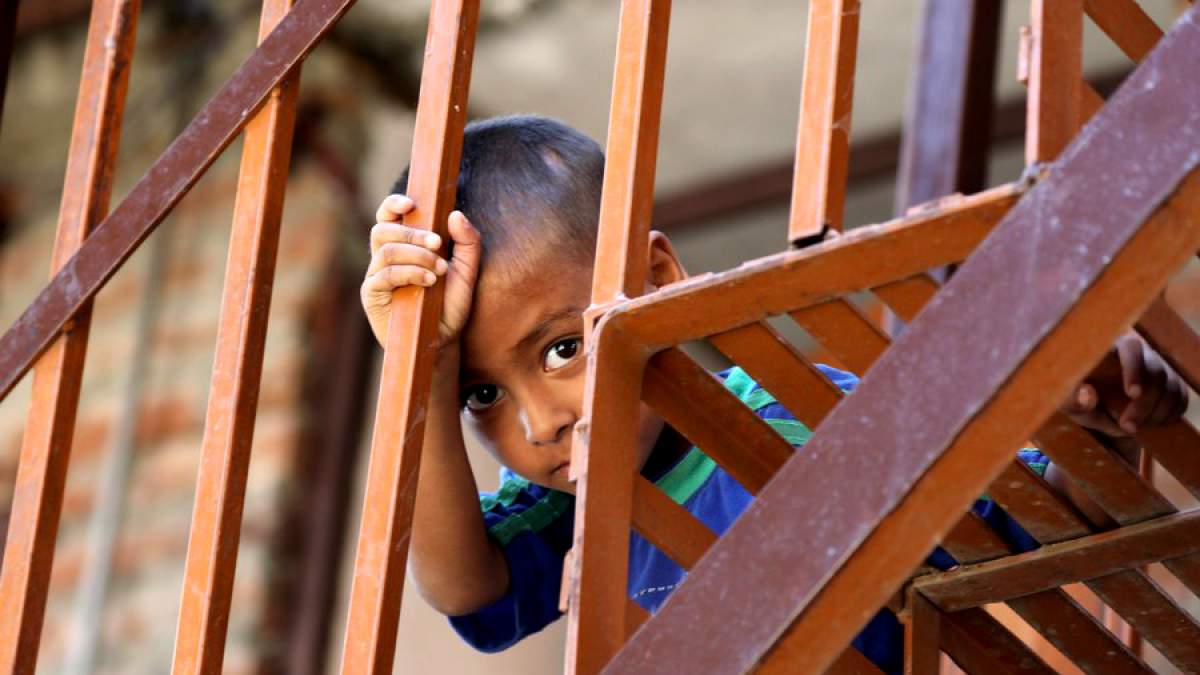
In a world where wars, persecution and humanitarian crises continue to force millions of people to flee their homes, World Refugee Day has been established to remind us that the right to seek safety is not a privilege but a fundamental human right. Under this year’s central message, “Until everyone is safe,” UNHCR is calling on younger generations to stand up for the right to seek asylum.
This is not merely a statement of solidarity but a call to action. For the 42 million refugees around the world today, this right is a lifeline. It is the difference between fear and protection, between despair and hope, between life and death.
More than 120 million people forcibly displaced worldwide
As every year, on the eve of World Refugee Day, UNHCR presented its annual report on forced displacement. According to it, 123.2 million people had been forcibly displaced worldwide by the end of 2024, due to persecution, wars, violence, human rights violations or events that seriously disturbed public order.
Of these, 42.7 million were refugees, while those forced to flee their homes but remaining within their own countries reached 73.5 million, a record number. Compared to the end of 2023, the total number of forcibly displaced people increased by 7 million (6%).
Asylum-seekers awaiting a decision on their applications as of 31 December 2024 rose to 8.4 million, an increase of 22% compared to the previous year and the highest figure ever recorded.
It is clear that we are facing a critical turning point in the issue of forced displacement. UNHCR stresses the need for a more coherent approach so that the burden of hosting displaced populations and managing their needs does not fall on only a limited number of countries. 85% of refugees are hosted in developing countries rather than in the Western world, while 80% remain in countries neighbouring their own. In addition, two-thirds of those forced to flee are internally displaced and have not crossed an international border.
Among millions of refugees, more than 20% are Palestinians, while the remaining 60% under UNHCR’s mandate originate from Syria, Afghanistan, South Sudan, Myanmar and Somalia. The vast majority live in urban areas and are young, with 53% being children. Türkiye remains the world’s leading host country in absolute numbers (3.5 million refugees), while Lebanon hosts the largest refugee population relative to its national population. Overall, 63% of all refugees under UNHCR’s mandate are hosted in just ten countries worldwide.
The “1951 Refugee Convention”
The first observance of World Refugee Day took place in 2001, marking the 50th anniversary of the signing of the “Convention relating to the Status of Refugees”.
This Convention was adopted after the end of the Second World War and is also known as the «1951 Refugee Convention». It is a multilateral treaty adopted by the United Nations that defines who is considered a refugee, establishes the rights of individuals granted asylum, and outlines the legal obligations of states that grant it. The Convention is based on Article 14 of the 1948 Universal Declaration of Human Rights, which recognises the right of individuals to seek asylum in other countries. Today, international law defines refugees as people who are unable or unwilling to return to their country of origin due to a well-founded fear of persecution based on race, religion, nationality, political opinion, membership of a particular social group, or even sexual orientation.
Unfortunately, as reality shows today, these provisions often remain merely words on paper. In practice, rights are violated daily, and in many cases this occurs even through official state policies, with the tolerance of the international community. In 2026, war, violence, economic inequality and persecution on a global scale are forcing more people than ever to flee their homes and countries.
Thus, although World Refugee Day is marked on 20 June, for the world’s refugees, days of celebration still seem far away.
The rise of nationalism, racism and intolerance, combined with the conditions in host countries and often incoherent and highly toxic migration policies, perpetuate the vicious cycle of the refugee tragedy. From the criminalisation of refugees in various countries and detention centres to the ever-growing fences along Europe’s borders, refugees continue to suffer and lose their lives at sea and on land in their search for protection in the West.
World Refugee Day reminds us… but is there truly hope?