
MEMORY FOR THE EARTH
Destruction, plunder, annihilation, genocide: the nations that have been perpetrating these acts for centuries are the very ones that claim to rule the world. For centuries, these colonial powers have faced resistance from the peoples they seek to subjugate.
Whilst the destruction and poisoning of the earth seem to be one of the obsessions of the imperialist powers, other peoples are fighting to be its guardians.
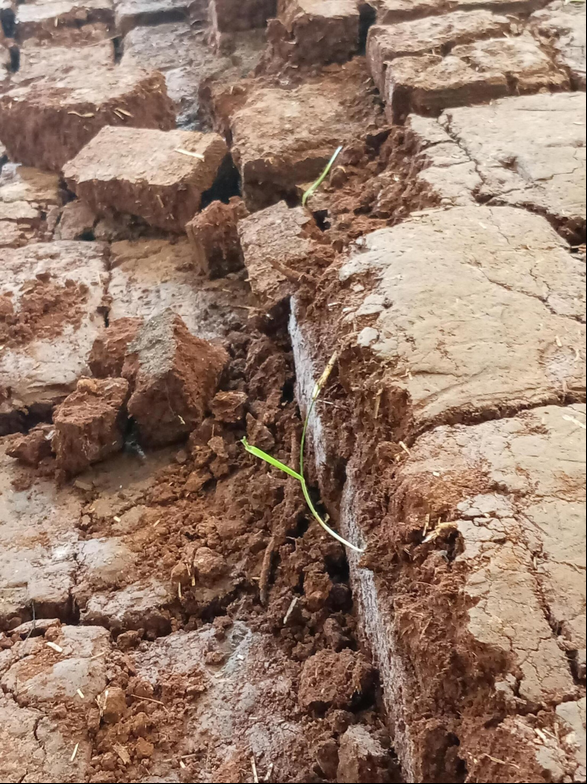
A wheat shoot growing in soil contaminated with white phosphorus in northern Lebanon.
A tiny seed sprouting amidst cobblestones made from soil ravaged by Israeli attacks bears witness to the earth’s power to regenerate. In Beirut in February 2026, an exhibition presented a map of Israeli white phosphorus attacks between October 2023 and November 2024. The data on this site documents the human and ecological cost of war, challenging misleading media narratives. Like this small sprout, they tell a story of resilience, solidarity and an unwavering quest for justice.
In these colonisations, the question of land and its occupation is central. This is true both for the colonisers and for the inhabitants of the invaded territories.
To seize the land of others, one must erase their memory; one must make them disappear.
To defend the land, one must hold onto its memory and pass it on ‘just as one passes on a language’ – Mahmoud Darwish (And the Land Is Passed On Like a Language. Translated by Elias Sanbar, published by Actes Sud)
In this struggle for life against death, memory remains an indispensable tool for bearing witness to what once was, and what might be, a land inhabited by people deeply rooted in it.
For nearly a century now, in Palestine, keys, photographs and debris have filled the history of inhabitants who have been expelled, dispossessed and torn from their land. The name of every razed village, carried in the folds of memory, lodged deep within a history that nothing can fully erase or succeed in making disappear.
A century later, they are still there, on the threshold of their return, a key hidden within their history.
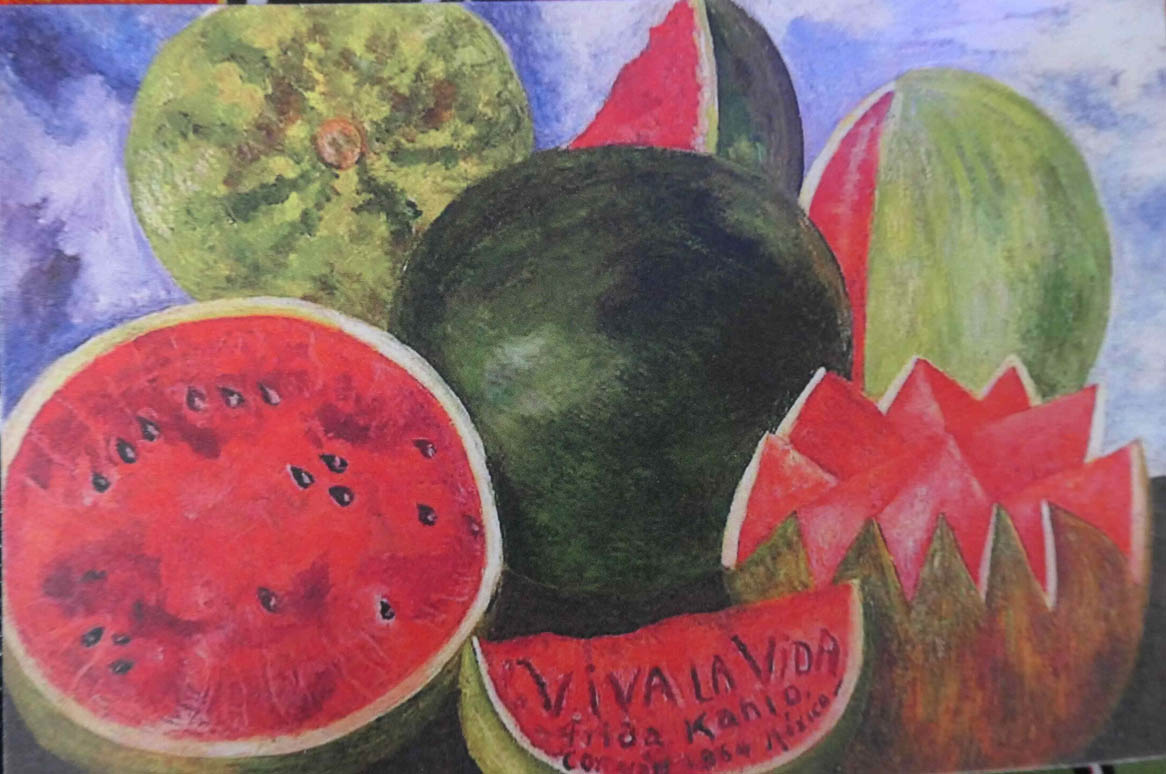
Viva la Vida Frida Khalo 1954
“They tried to bury us, but they didn’t know we were seeds,” is a saying in Mexico, which was subjected to the first waves of European colonisation.
This memory lies at the heart of the struggle of the peoples of Palestine, Lebanon and, more broadly, the Near and Middle East.
The Israeli bombings in Lebanon on 8 April – over 100 strikes in 10 minutes – followed by 200 strikes on 11 April, which the genocidal state boasts about, serve as a stark reminder that respect for ceasefires and treaties has consistently been a sham for nations founded on the plundering of land and the annihilation of their peoples.
The USA, France, Germany and Britain have all been, or still are, colonial powers; they are not the only ones, but their support for Israel is all the less surprising given that it serves to justify the crimes committed by one and all over the centuries in the name of civilisation, progress, modernity, democracy… The pretexts may vary from century to century or year to year.
The assertion of superiority, of contempt, and the reduction of the other to an inferior being is a recurring theme. It is this that enables the annihilation, the genocide, the apartheid of dehumanised beings who will be reduced to nothing more than rubble and mass graves.
In Palestine, as in Lebanon, it is shattered lives and devastated territories that the survivors are confronted with. And it is precisely there that the inhabitants organise themselves to face destruction, disappearance and oblivion.
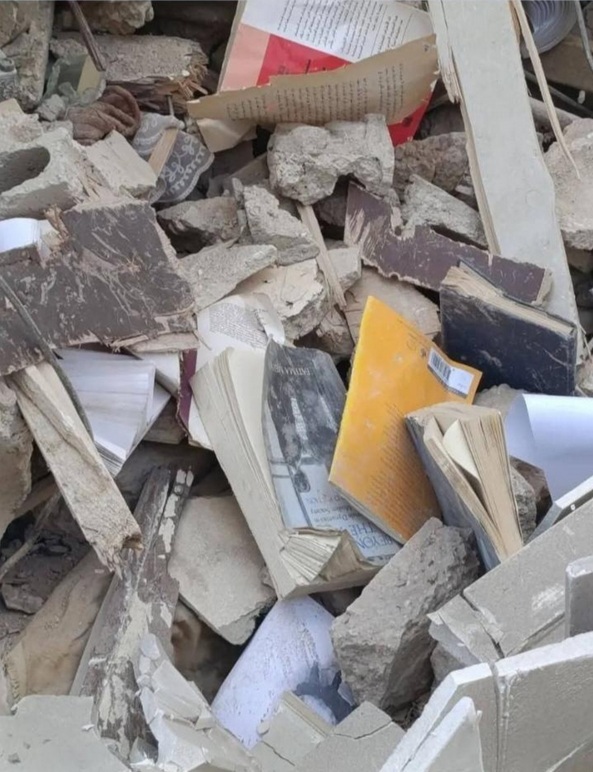
2026-04-08 Israeli bombing in Lebanon
In Burin, in the Nablus district of occupied Palestine, in the face of repeated attacks by settlers and the army, a cooperative has been set up to combat land grabbing. Thanks to the ‘SEMER LA SOLIDARITÉ’ campaign, it has just planted more than 2,000 Palestinian olive, citrus, fig and almond trees to replace those destroyed by settlers over the past year.
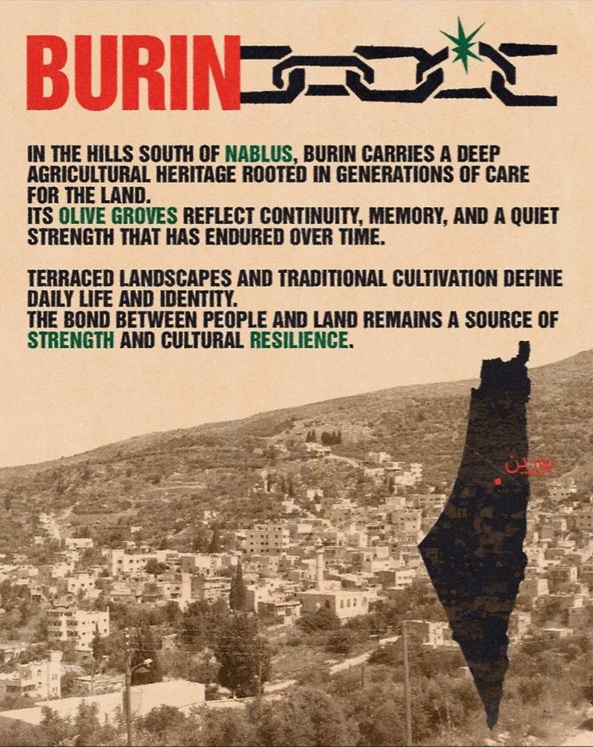
Burin Cooperative: Olive cultivation as a living memory
“Olive trees are part of our history here, and the settlers are determined to destroy them. The land and the olive trees are inseparable from our dignity. The settlers know full well what these olive trees mean to Palestinian farmers, and that is precisely why they cut them down, poison them and burn them. But that does not mean we will give up. No, if they cut down, burn or poison one tree, we will plant ten. And that is exactly what we have done this year as part of our campaign. We have planted over 2,000 olive trees.” Ghassan Najjar, of the Burin Agricultural and Land Cooperative.
Burin has a rich agricultural heritage, rooted in generations of respect for the land. Its olive groves reflect the continuity, memory and strength that have endured through the ages. The terraced landscapes and traditional farming methods shape daily life and the local identity. The bond between people and the land has remained a source of strength and cultural resilience.
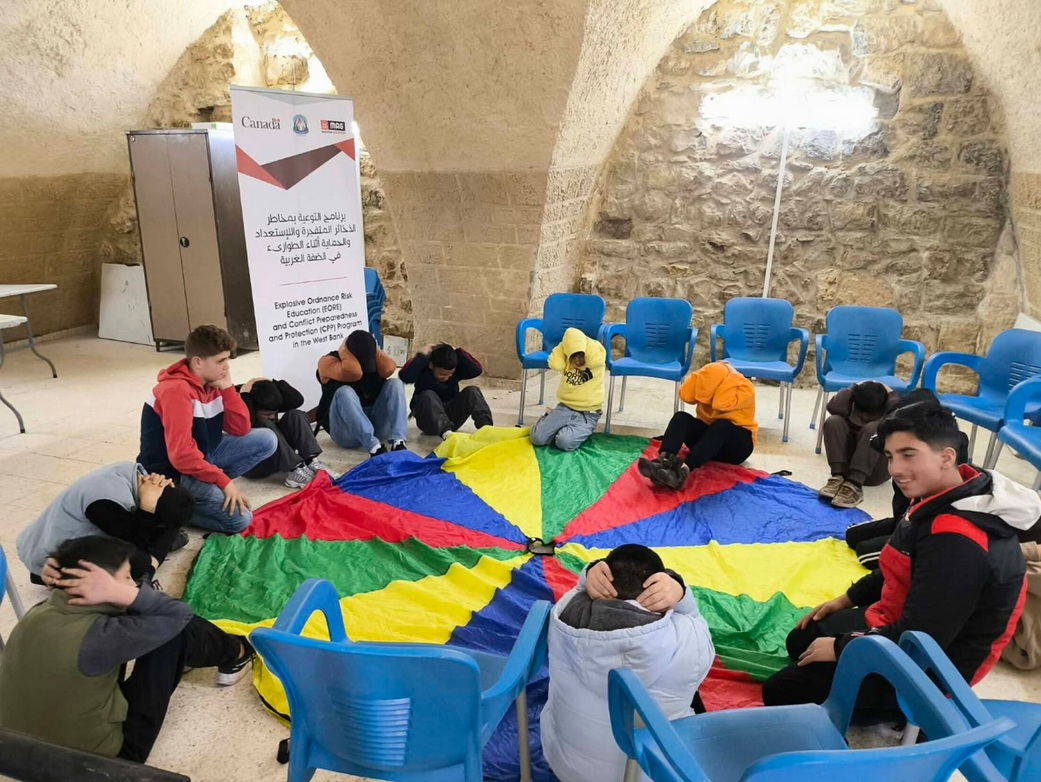
Burin Sports Club: Playing with a cooperative parachute and preparing together to defend against the shells
Continuing to defend the land also means taking into account the difficulties faced by children. At the Burin Sports Club, awareness-raising sessions on the dangers of unexploded ordnance are organised for the village children, given the difficult situation and the constant dangers, as well as sessions providing psychological support.
In Hermel, in northern Lebanon, there is a school – the Esprits Libres school – where the teachers come up with answers every day to the terrible questions asked by children whose families and friends have been killed by Israeli missiles.
There, we find the same care for others, for those who will survive and face the aftermath of the war. A war which they hope will finally end with respect for their country.
Here, too, responses are emerging that unfurl like parachutes to combat the anguish of war, ward off fear, and breathe life into what makes it possible, collectively, to resist. These teachers are setting up a library and sending out appeals across the world to fill it. They are encouraging people to write poems and essays whilst waiting for the noise of the drones to cease – drones that darken the sky and unleash their missiles.
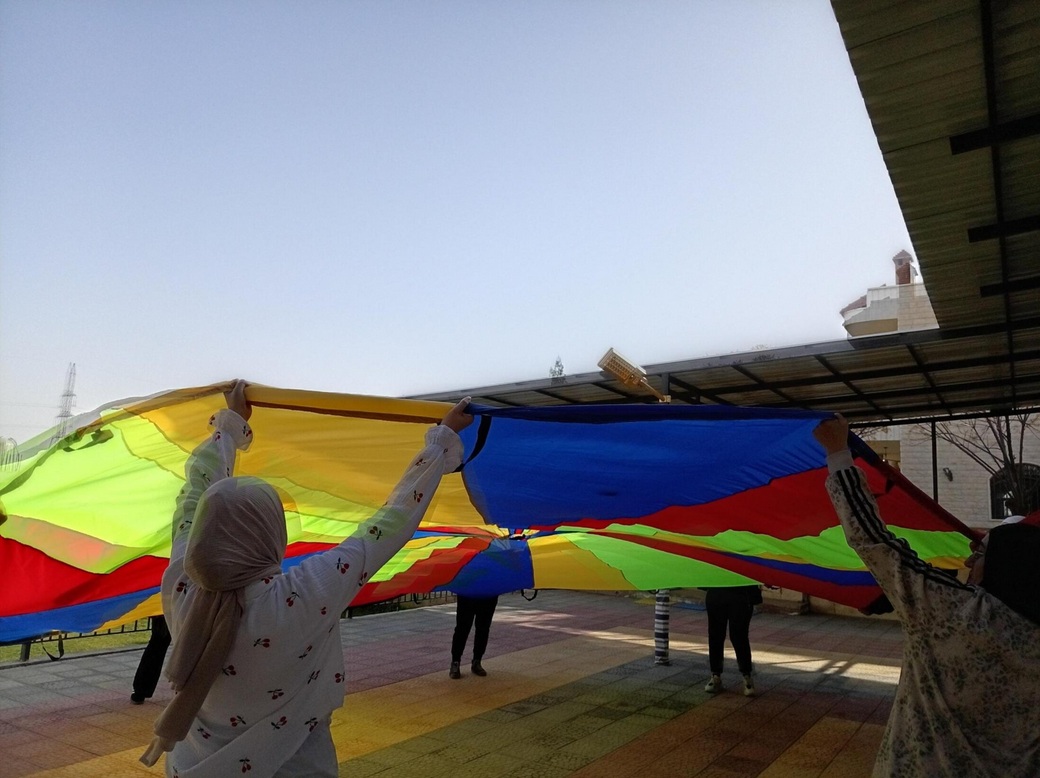
In Hermel, too, they use the cooperative parachute to help overcome fear